The Ultimate Guide to Automated Regression Testing: Everything Modern Dev Teams Need in 2026
Your team ships code faster than ever. New features land daily. But here’s the problem: every deployment risks breaking something that worked yesterday.
Manual regression testing doesn’t scale. Writing and maintaining test scripts takes weeks. Your QA team drowns in repetitive checks while critical bugs slip through.
Automated regression testing solves this. It reruns your entire test suite automatically whenever code changes, catching regressions before they reach production. In 2026, the best tools go further: they use AI to write tests, heal broken selectors, and adapt to your application without constant maintenance.
This guide covers everything modern dev teams need to implement automated regression testing that actually works.
Why Manual Regression Testing Fails at Scale
Manual testing worked when you shipped quarterly. Not anymore.
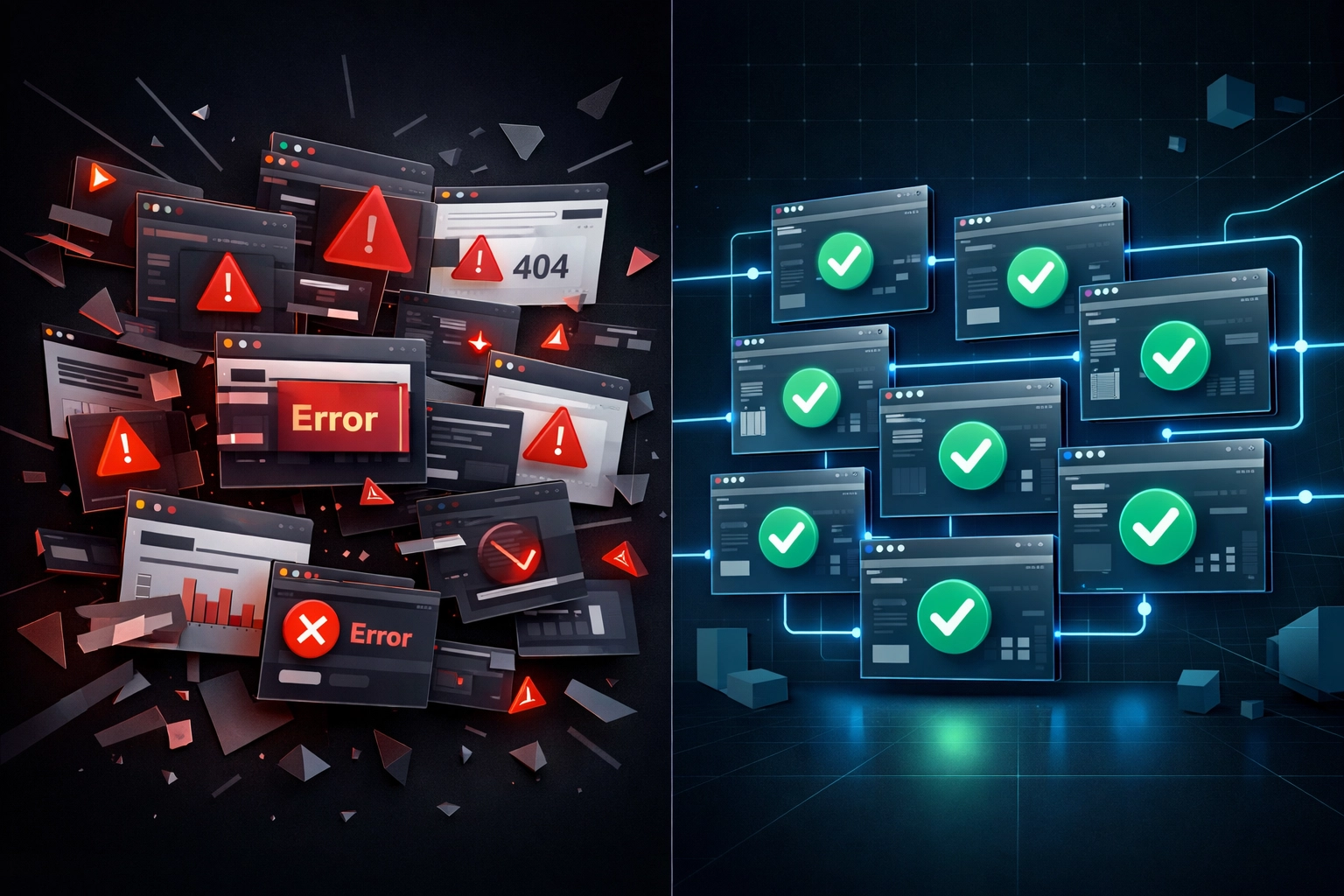
Today’s development velocity breaks manual processes. Your team makes hundreds of commits weekly. Each change requires regression checks across multiple browsers, devices, and user flows. Manual testing creates bottlenecks:
- Slow feedback loops that delay releases
- Inconsistent coverage depending on who runs tests
- Human error in repetitive tasks
- Team burnout from boring, manual work
- Scaling costs as your application grows
The math doesn’t work. Testing manually takes days. Automated regression testing runs the same checks in minutes.
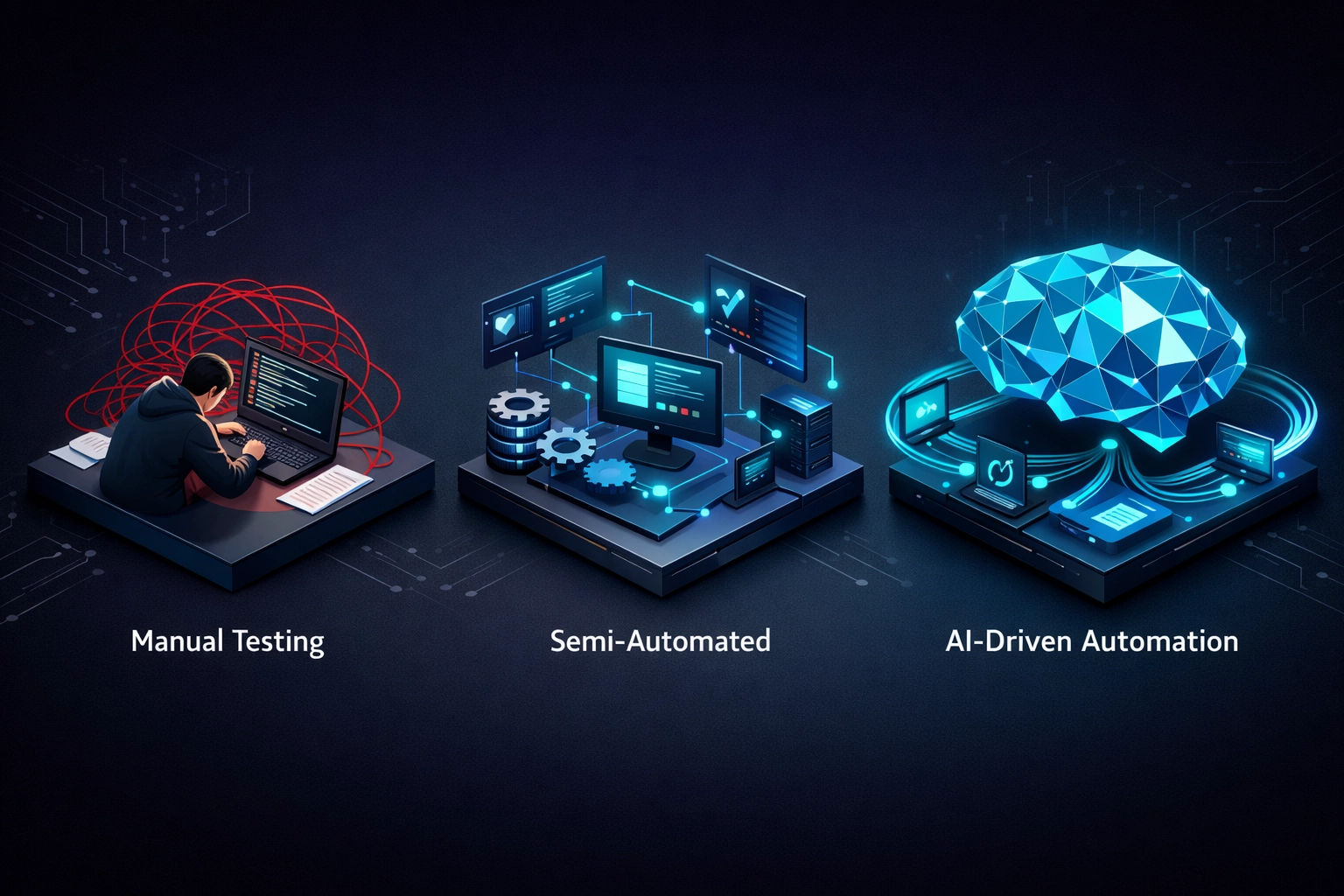
The Shift from Manual Scripts to Autonomous Testing
Traditional test automation helped but created new problems. You wrote Selenium or Playwright scripts line by line. Every UI change broke selectors. Maintenance competed with new coverage for engineering time.
2026 changes the game entirely.
Modern regression testing tools use AI to handle what developers previously coded manually:
Test Generation: Describe what to test in plain language. AI generates the Playwright scripts automatically. No more writing cy.get(‘[data-testid=“submit-button”]’).click() for every interaction.
Self-Healing: When your designer changes a button’s class name, AI-powered tools detect the change and update selectors automatically. Your tests keep passing without manual fixes.
Intelligent Execution: Instead of running 5,000 tests on every commit, AI identifies which tests matter for specific code changes. Run only what’s relevant. Save hours.
Setup in Minutes vs Weeks: Point your tool at your staging URL. It crawls your application, discovers forms and user flows, and generates initial test coverage automatically. Traditional approaches required weeks of manual scripting.
This autonomous approach can reduce repetitive maintenance with reviewed cases and eligible locator repair while expanding coverage beyond what manual teams could achieve.
Core Best Practices for Automated Regression Testing
Implementing automation successfully requires strategy, not just tooling.
Start with High-Risk Areas
Don’t automate everything immediately. Focus regression tests on:
- Core user journeys (signup, checkout, critical workflows)
- Frequently changed features where bugs appear most
- Integration points with third-party services
- Security-critical flows (authentication, payments, data access)
Risk-based prioritization delivers maximum value with minimum initial investment.
Build a Hybrid Test Pyramid
As an illustrative planning example, distribute checks across your test pyramid; the percentages below are not AegisRunner coverage metrics or universal targets:
- Unit tests (70%): Fast, focused, catch logic errors early
- Integration tests (20%): Verify components work together
- E2E regression tests (10%): Validate complete user flows
Automation handles repetitive scenarios. Keep manual testing for exploratory work, usability validation, and edge cases requiring human judgment.
Integrate with CI/CD Pipelines
Automated regression testing provides zero value if developers ignore it.
Embed tests directly in your CI/CD pipeline:
- Run regression suites on every pull request
- Block merges when critical tests fail
- Send Slack notifications for test failures
- Generate trend reports showing pass rates over time
Integration creates fast feedback loops. Developers fix issues within minutes instead of discovering bugs days later in staging.
Keep Tests Current and Organized
Outdated tests waste time. Tests that check removed features clutter your suite and slow execution.
Organize tests by feature module or user journey. Archive deprecated tests rather than letting them fail repeatedly. Review flaky tests monthly: fix or remove them.
Modern tools with self-healing capabilities dramatically reduce this maintenance burden.
AI’s Transformative Role in 2026
AI shifted from nice-to-have to essential for effective regression testing.
Agentic Test Creation
Describe user scenarios in plain English. AI generates complete Playwright test scripts covering the flow, including assertions, error handling, and edge cases. Setup time drops from weeks to minutes.
Self-Healing Test Maintenance
When UI elements change, AI automatically updates selectors instead of breaking tests. Your suite adapts to application changes without manual intervention. Maintenance overhead approaches zero.
Predictive Test Selection
AI analyzes code changes and determines which regression tests actually need to run. If you modify your pricing page, you don’t need to run checkout tests. Save hours on every build.
Comprehensive Coverage
AI-generated tests catch accessibility issues (WCAG compliance), security vulnerabilities (XSS, CSRF), and broken links automatically. Manual teams rarely check these consistently.
Evaluate generated cases against the real app and review unresolved failures. A high pass rate alone does not establish defect detection or release readiness.

How to Implement Automated Regression Testing
Success requires pragmatic rollout, not big-bang deployment.
Week 1: Start Small
Choose 3-5 critical user flows for initial automation. Login, core feature usage, and checkout make good candidates. Get these running reliably before expanding.
Modern AI-first tools let you describe these flows and generate tests immediately. Traditional tools require writing scripts manually: plan accordingly.
Week 2-4: Integrate with CI/CD
Connect your regression suite to your CI/CD pipeline. Start with pull request checks. Add nightly full regression runs once stability improves.
Set up notifications so developers see failures immediately. Fast feedback drives adoption.
Month 2: Expand Coverage Gradually
Add 5-10 new test scenarios weekly. Let your team build confidence with the tools and processes. Rushed automation creates technical debt.
Focus on areas where manual testing currently catches the most bugs. These deliver immediate value.
Month 3+: Scale and Optimize
With solid foundations established, expand to comprehensive coverage. Use AI to automatically generate tests for remaining user flows.
Monitor execution time. Optimize slow tests. Remove flaky tests that don’t provide value. Treat your test suite like production code: refactor and improve continuously.
What to Look For in Regression Testing Tools
Not all automation platforms deliver the same value in 2026.
Essential Capabilities:
- Zero-code test creation via AI or visual recording
- Self-healing selectors that adapt to UI changes
- Fast execution with parallel test running
- CI/CD integration for GitHub, GitLab, Jenkins
- Cross-browser support (Chrome, Firefox, Safari, Edge)
- Comprehensive reporting with screenshots and logs
- API testing alongside UI regression checks
Advanced Features That Matter:
- Accessibility testing against WCAG standards
- Security scanning for common vulnerabilities
- Visual regression detection for UI changes
- Mobile and responsive testing
- Integration with AI coding agents and workflows
The best tools close the loop between development and testing. Code changes trigger relevant regression tests automatically. Failures notify the right developers immediately. This tight integration ensures quality without slowing velocity.

The AegisRunner Approach to Autonomous Testing
AegisRunner takes an AI-first approach that eliminates traditional pain points.
Point it at your application. It crawls your site, discovers user flows, and generates Playwright regression tests automatically. Setup takes minutes instead of weeks.
Self-healing AI maintains tests without manual intervention. UI changes don’t break your suite: the system adapts automatically.
Each test run includes accessibility checks, security scanning, and broken link detection. Comprehensive coverage beyond what manual teams achieve.
Tests integrate directly with CI/CD pipelines and AI coding agents. New code gets validated against your regression suite immediately. Developers catch issues before they deploy.
The platform generates readable Playwright scripts you can customize and extend. You’re not locked into a proprietary format. Export tests and run them anywhere.
Learn how AegisRunner works or see live demos of autonomous regression testing in action.
Start Your Automated Regression Testing Journey
Manual regression testing cannot keep pace with modern development velocity. Automated approaches deliver faster feedback, consistent coverage, and freedom from repetitive work.
AI-powered tools in 2026 make implementation straightforward. Generate tests in minutes. Let self-healing handle maintenance. Focus your team on building features instead of fighting brittle test scripts.
Start small with critical flows. Integrate with CI/CD early. Scale gradually as confidence builds. Within months, comprehensive automated regression testing protects your application without slowing releases.
The transition from manual to autonomous testing isn’t optional anymore. Your competitors already made the shift. Time to catch up.
Get started with automated regression testing and ship with confidence. No credit card required.