Why Visual Regression Testing is Essential for Modern Web Apps
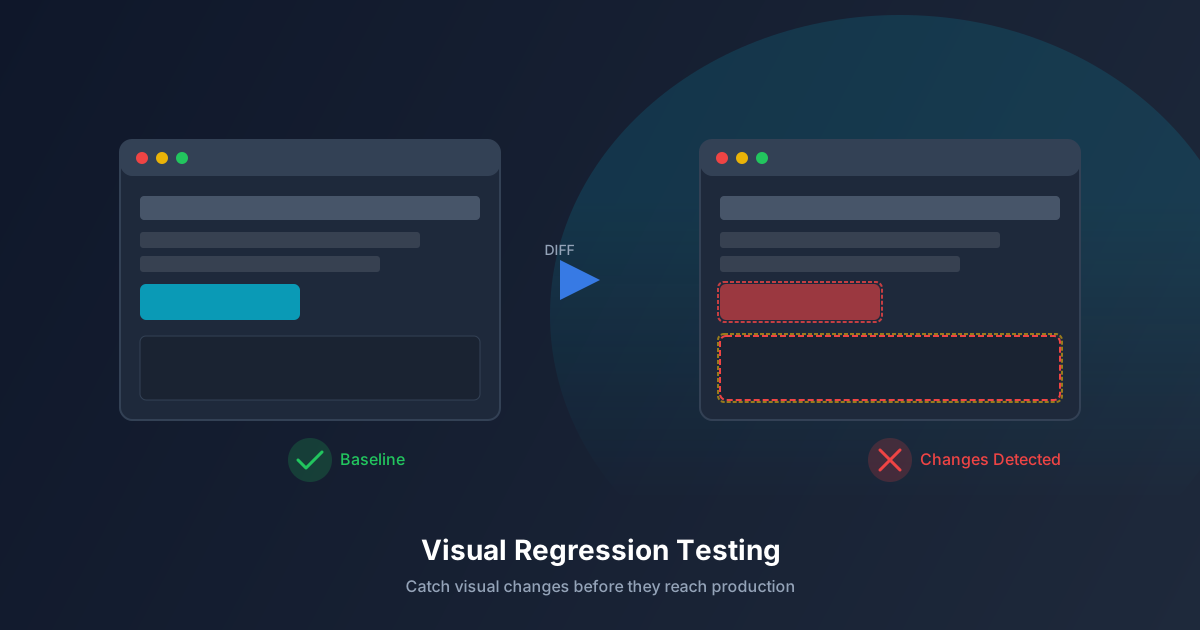
Every developer has experienced it: you push a CSS change to fix a button alignment on one page, only to discover it broke the layout on three other pages. Traditional unit tests and integration tests are great at verifying logic, but they are completely blind to visual changes.
This is where visual regression testing comes in — an automated approach that captures screenshots of your application and compares them against approved baselines to detect unintended visual changes.
What is Visual Regression Testing?
Visual regression testing takes a pixel-by-pixel (or perceptual) comparison of your web application’s UI before and after code changes. When differences are detected, the test flags them for human review.
Unlike functional testing that checks whether a button submits a form, visual testing checks whether that button is correctly positioned, properly styled, and visually consistent across browsers and devices.
Why Functional Tests Aren’t Enough
Consider a scenario where your team updates a shared CSS utility class. Every functional test passes — buttons still click, forms still submit, and APIs still respond correctly. But the padding on your pricing cards is now doubled, your navigation menu overlaps the hero section on mobile, and your footer links turned invisible against the background.
Functional tests verify behavior. Visual tests verify appearance. You need both.
The Real Cost of Visual Bugs
Visual bugs might seem minor, but they carry real business impact:
- Lost conversions: A misaligned CTA button or broken checkout layout directly impacts revenue. Studies show that 38% of users stop engaging with a website if the layout is unattractive.
- Brand damage: Inconsistent UI signals a lack of polish and professionalism. Users associate visual quality with product quality.
- Increased support tickets: When elements overlap or become unreadable, users flood support channels asking for help.
- Delayed releases: Finding visual bugs late in the release cycle forces hotfixes, rollbacks, or delayed launches.
How Visual Regression Testing Works
1. Capture Baselines
The first run captures screenshots of every page (or component) in your application. These become your approved baselines representing the “correct” visual state.
2. Run Comparisons
On subsequent runs — triggered by pull requests or CI/CD pipelines — the tool captures new screenshots and compares them pixel-by-pixel against the baselines.
3. Review Differences
When visual differences are detected, the tool generates a diff image highlighting exactly what changed. Teams review these diffs and either approve them (updating the baseline) or flag them as bugs.
4. Continuous Monitoring
With baselines maintained automatically, visual regression testing becomes a continuous safety net that catches visual bugs before they reach production.
Key Benefits for Modern Teams
Catch CSS Side Effects
CSS is global by nature. A change in one file can cascade across your entire application. Visual regression testing catches these side effects immediately.
Cross-Browser Confidence
Your application might look perfect in Chrome but broken in Safari. Visual testing across multiple browsers ensures consistency for all users.
Responsive Design Validation
With users accessing your app on everything from 4-inch phones to 32-inch monitors, visual regression testing at multiple viewport sizes ensures responsive layouts work correctly.
Faster Code Reviews
Instead of manually checking every page affected by a CSS change, reviewers can look at visual diffs to immediately understand the impact of the change.
Getting Started with AegisRunner
AegisRunner makes visual regression testing effortless:
- Crawl your site — AegisRunner automatically discovers all pages and interactive states.
- Generate baselines — Screenshots are captured across configured viewports and browsers.
- Integrate with CI/CD — Every pull request triggers automatic visual comparisons.
- Review and approve — An intuitive diff viewer shows exactly what changed, with one-click approval for intentional updates.
Visual regression testing is no longer optional for teams shipping modern web applications. The complexity of CSS frameworks, responsive layouts, and component libraries makes manual visual QA unsustainable. Automated visual testing gives your team confidence that every deployment looks exactly as intended.
Ready to catch visual bugs before your users do? Get started with AegisRunner and set up visual regression testing in minutes.