How to Build a Flakiness Budget and Stop Wasting Engineering Hours
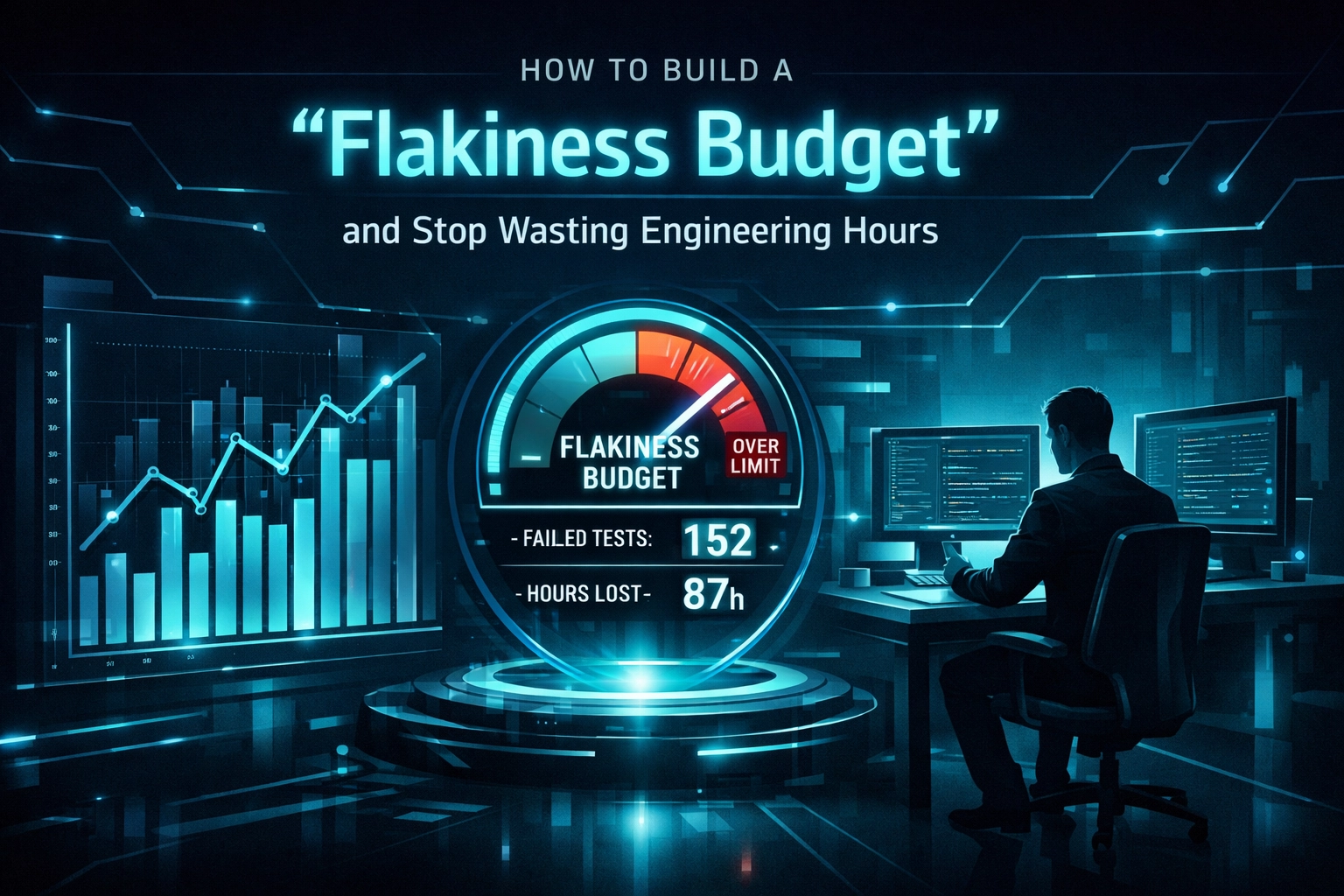
Flaky tests are the silent killers of engineering velocity. You know the routine. A developer pushes code. CI/CD pipeline starts. Ten minutes later, a red “failed” icon appears. The developer checks the logs. It’s that one Login Button test again. They click “Rerun Job.” It passes. They merge.
This “rerun and hope” culture is a disaster for your bottom line. Industry data shows that flaky tests consume approximately 40% of QA team time on maintenance rather than bug detection. When your team stops investigating failures because “the test is just flaky,” you have already lost. Real bugs slip into production. Trust in your automation suite evaporates.
To stop the bleed, you need a Flakiness Budget.
The Hidden Cost of Engineering Friction
Every time a developer ignores a failing test, they build a habit of distrust. If the test suite isn’t reliable, it isn’t useful. You are paying high-salary engineers to play whack-a-mole with brittle CSS selectors and timing issues.
The cost isn’t just time. It is compute resources. Each rerun consumes CI credits. It is context switching. It is delayed releases. If your goal is to solve the QA bottleneck and ship 10x faster, you must treat flakiness as a first-class technical debt.

What is a Flakiness Budget?
A flakiness budget is a threshold for acceptable instability. Like an Error Budget in SRE, it turns a vague metric into an accountability process.
1. Define Your Threshold
Establish a specific percentage of acceptable flakiness per suite. Most high-performing teams set this at 1%. If more than 1 out of 100 test runs fails due to infrastructure or selector issues, the budget is blown.
2. Establish Ownership
Tests without owners are tests that stay broken. Assign every test to a specific feature team or component owner. When a test blows the budget, the owner is responsible for the fix.
3. Monitor and Alert
Automate your tracking. Track the flaky test rate at the team level. High flakiness should trigger an immediate notification. If the budget is exceeded, the team pivots to maintenance. No exceptions.

Why CSS Selectors are Your Biggest Liability
Most flakiness stems from how tests identify elements. Traditional tools rely on brittle paths like div > span > .btn-primary-v2.
Modern web development moves fast. A designer changes a wrapper. A developer swaps a utility class. Suddenly, your Playwright or Selenium script is broken. This is why you should stop chasing CSS classes. CSS is for styling, not for testing logic.
Resilient Testing with AegisRunner
At AegisRunner, we built our platform to eliminate the selector maintenance nightmare.
Semantic, Text-Based Selectors
AegisRunner uses AI to identify elements by their meaning and visual labels. Instead of looking for .css-19283-submit, our engine looks for the “Submit” button. If you change the button color or move it into a different div, AegisRunner still finds it.
Self-Healing Tests
When your UI changes significantly, AegisRunner doesn’t just crash. Our self-healing AI analyzes the page state and suggests the fix or updates the test automatically.

The “Minutes, Not Days” Setup
With AegisRunner, you get zero-code test creation in minutes. Our AI crawler navigates your application like a user, discovers pages, forms, and interactive elements automatically.
- Step 1: Enter your URL.
- Step 2: Let the AI crawl and discover edge cases.
- Step 3: Convert discovered paths into permanent regression tests.
Restoring Developer Confidence
When you implement a flakiness budget and switch to a resilient tool like AegisRunner, developers stop dreading the CI pipeline. They trust that a red build means a real bug, not a broken selector.
Key Metrics to Track Today
- Flaky Test Rate: (Number of tests that pass after a rerun) / (Total test runs).
- Time to Fix: How many engineering hours are spent updating selectors per week?
- Mean Time to Detection (MTTD): How quickly do you find actual regressions vs. infrastructure noise?
Most teams discover they are spending 15-20 hours per week just keeping their existing tests alive. AegisRunner reduces this to near zero.
Moving Beyond Manual Scripts
Whether you use React, Vue, or Next.js, your testing tool should be framework-agnostic. AegisRunner provides the flexibility of an AI-driven platform with the power to export tests as Playwright scripts if you ever need them.
Conclusion: Stop the Bleed
A flakiness budget is the first step toward a mature QA process. But a budget only manages the problem: AegisRunner solves it. By moving to text-based selectors and AI-driven automation, you eliminate the root cause of flakiness.
Ready to evaluate the maintenance workflow? Start on the Free plan and run a representative scan. No credit card required.