Are Manual E2E Tests Dead? Do People Still Write Playwright Scripts By Hand?
Let’s cut through the noise: manual E2E tests aren’t dead. But if you’re still writing Playwright scripts by hand for every single test case, you’re doing it the hard way.
Manual testing remains useful for exploratory work and behaviors that automated checks do not cover. But here’s the catch: most of that manual work is happening in the wrong places.
The Playwright Paradox
Playwright is brilliant. Fast, reliable, multi-browser support, great API. If you’ve used it, you know it’s leagues better than its predecessors.
But here’s what nobody tells you: writing Playwright tests is easy. Maintaining them is hell.
Your app changes. A button moves. A class name updates. Someone refactors the login flow. Suddenly your test suite is throwing errors like confetti at a parade.
You’re spending Tuesday mornings debugging locator.click() failures instead of shipping features. Your CI pipeline is red more often than it’s green. The QA team is asking why the tests are flaky again.
Sound familiar?
The Manual Script Maintenance Trap
Let’s talk numbers. Writing a single E2E test manually takes 30-60 minutes if you know what you’re doing. For a typical web app with 50 user flows, that’s 25-50 hours of initial work.
Now add maintenance. Every sprint brings changes. Every feature update requires test updates. You’re looking at 5-10 hours per sprint just keeping tests current.
That’s 120-240 hours per year on test maintenance alone. For a single application.
Most teams can’t sustain that. So tests get neglected. Coverage drops. Bugs slip through. The whole point of automation — catching regressions before they reach production — falls apart.
Enter AI Test Automation
The industry is shifting fast. AI-native platforms can now generate comprehensive E2E test coverage in days instead of months. These aren’t toy examples — we’re talking production-ready tests that understand your application’s structure.
Modern ai test automation platforms analyze your application, identify user flows, detect forms and interactive elements, and generate test scenarios automatically. The kind of work that used to take a senior QA engineer weeks now happens in hours.
But here’s where it gets interesting: self-healing capabilities.
When your app changes, AI-powered tests adapt automatically. Button moved? Test adjusts. Class name changed? Test figures it out. Measure the change in maintenance hours on the same workflow. Eligible locator repair can reduce repetitive work, but assertions, test data and changed business rules still need human review.
The Best of Both Worlds
Here’s the move: stop writing Playwright scripts manually, but don’t abandon Playwright.
AI generates your tests. You get Playwright code as output.
Why does this matter? Three reasons:
Full control. You’re not locked into a black box. Need to customize a test? The exported Playwright code is clean, readable, and standard. Any developer can jump in and modify it.
Integration with existing workflows. Your CI/CD pipeline already runs Playwright tests. Your team already knows the Playwright API. AI-generated tests slot right into your existing infrastructure — no migration required.
Escape hatch. When you need manual control for complex edge cases, you’ve got it. Write custom Playwright code alongside AI-generated tests. They work together seamlessly.
Tools like AegisRunner export to standard Playwright format. Generate tests with AI, get clean TypeScript/JavaScript code, run them anywhere Playwright runs. Local development, GitHub Actions, Jenkins, whatever you’re using.
When Manual Still Makes Sense
Let’s be real: AI doesn’t replace everything. Manual testing still has its place.
Complex user journeys that require human judgment. Security testing. Exploratory testing when you’re hunting for edge cases. Validating subtle UX details that automated tests might miss.
The key is knowing where to invest your manual effort.
Reserve manual testing for:
- Edge cases that run infrequently
- Scenarios requiring domain expertise
- New features where you’re still figuring out the test strategy
- Visual regression testing for subtle UI changes
Automate everything else with AI:
- Login/logout flows
- Form submissions
- Navigation testing
- CRUD operations
- Shopping cart workflows
- Search functionality
Your QA team’s time is valuable. Spend it on high-impact manual testing, not writing repetitive Playwright scripts for standard user flows.
The Practical Reality
Most development teams are moving to a hybrid approach. AI handles the bulk of test generation. Manual scripting fills the gaps.
Business analysts and manual testers can now create automated tests without writing code. Engineers focus on complex test scenarios and edge cases. Codeless and low-code platforms have democratized test creation beyond specialized QA engineers.
The result? Faster test creation. Better coverage. Less maintenance overhead.
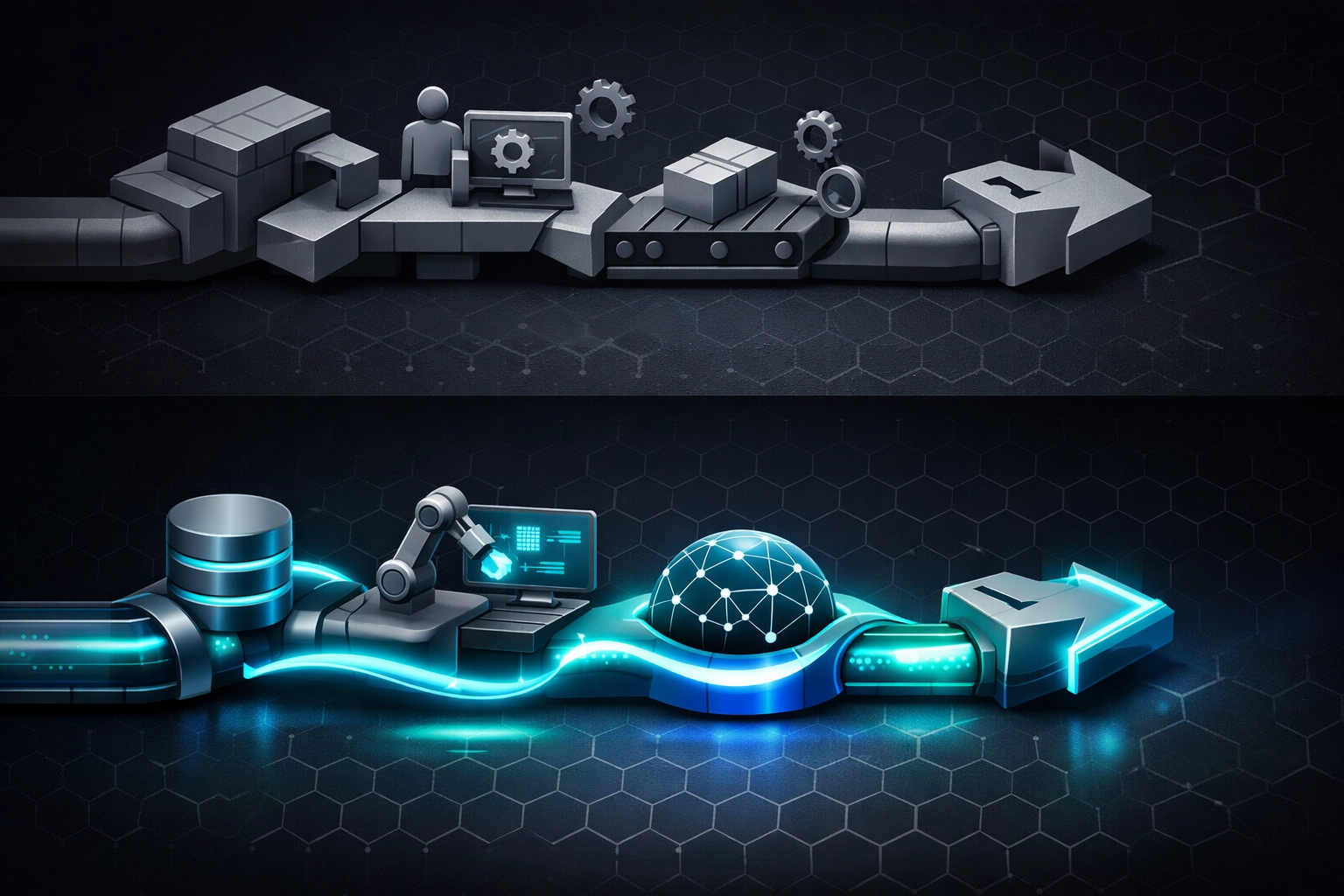
Your CI pipeline stays green. Regressions get caught early. Developers ship with confidence.
What This Means for Your Team
If you’re still hand-writing every Playwright test, you’re fighting an uphill battle. The economics don’t work.
AI test automation isn’t about replacing engineers. It’s about amplifying them. Generate the boilerplate. Maintain tests automatically. Export to standard formats when you need control.
Your team focuses on product development, not test maintenance. Your test suite grows without linear scaling of QA headcount. Your deploys happen faster because tests are reliable.
That’s the shift happening right now. Manual E2E tests aren’t dead — they’re evolving. The question isn’t whether to use AI for test automation. It’s how fast you can adopt it before your competitors do.
Check out AegisRunner’s features to see how AI-generated tests export to clean Playwright code. Or explore the quick start guide to generate your first automated test suite in minutes.
The future of E2E testing isn’t manual vs. automated. It’s AI-generated automation with manual control when you need it. Best of both worlds.