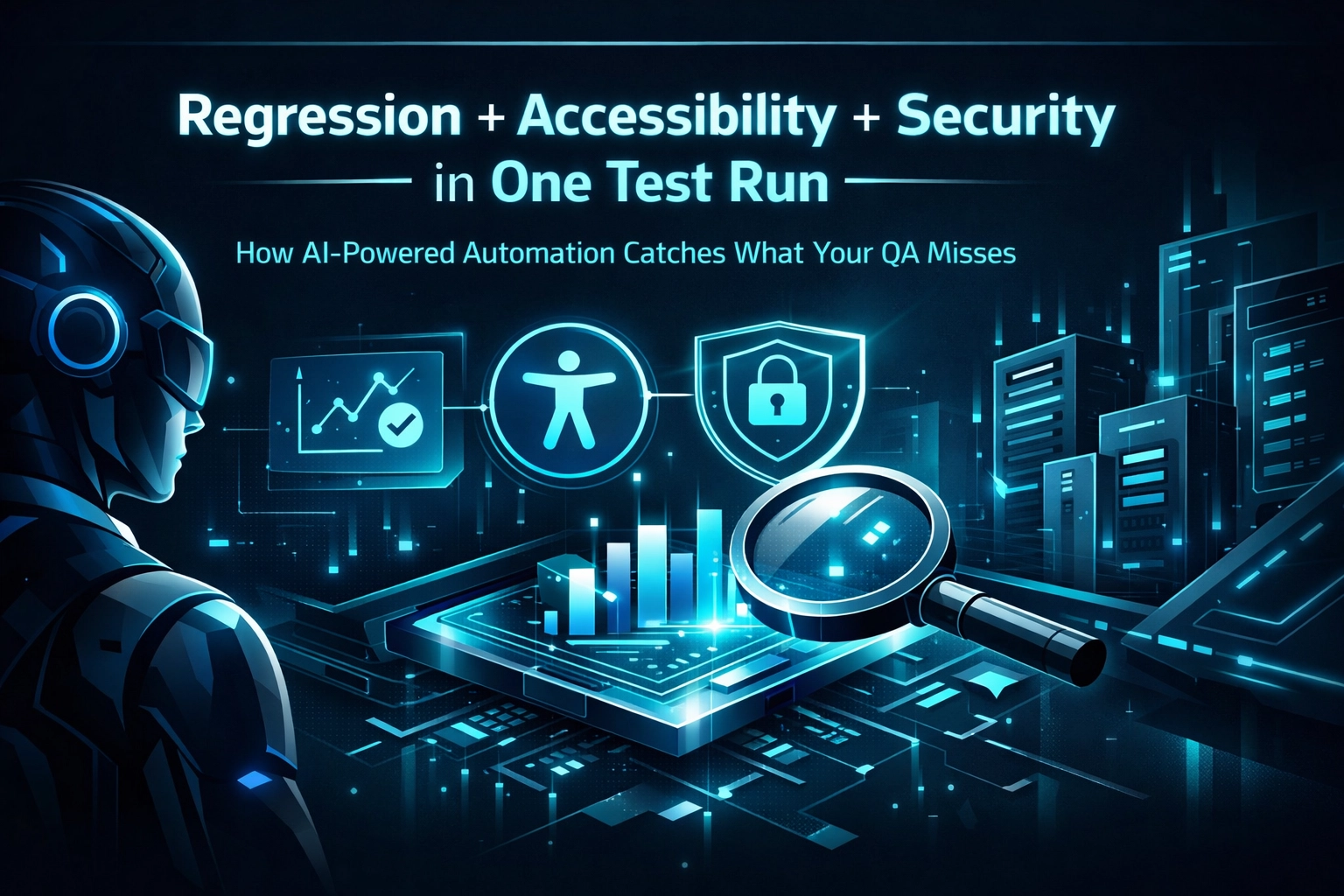
Regression + Accessibility + Security in One Test Run: How AI-Powered Automation Catches What Your QA Misses
Your QA team runs regression tests on Tuesday. Accessibility audits happen Thursday. Security scans? Maybe next sprint if there’s time.
This fragmented approach creates gaps. Critical issues slip through because no one’s watching all three dimensions simultaneously.
AegisRunner’s AI Page Analysis changes that. One test run. Three validation layers. Zero blind spots.
The Hidden Cost of Separate Test Suites
Traditional testing treats regression, accessibility, and security as separate concerns. Different tools. Different schedules. Different teams.
This creates problems:
- Visual regressions break accessibility features without triggering alerts
- Security vulnerabilities hide behind passing functional tests
- Accessibility violations deploy to production because they weren’t checked during regression testing
- Teams waste time coordinating between multiple testing tools and reports
The real issue? Each testing dimension exists in isolation. Your regression suite doesn’t know about WCAG violations. Your accessibility checker ignores SQL injection risks.
How AI-Powered Automation Unifies Testing Dimensions
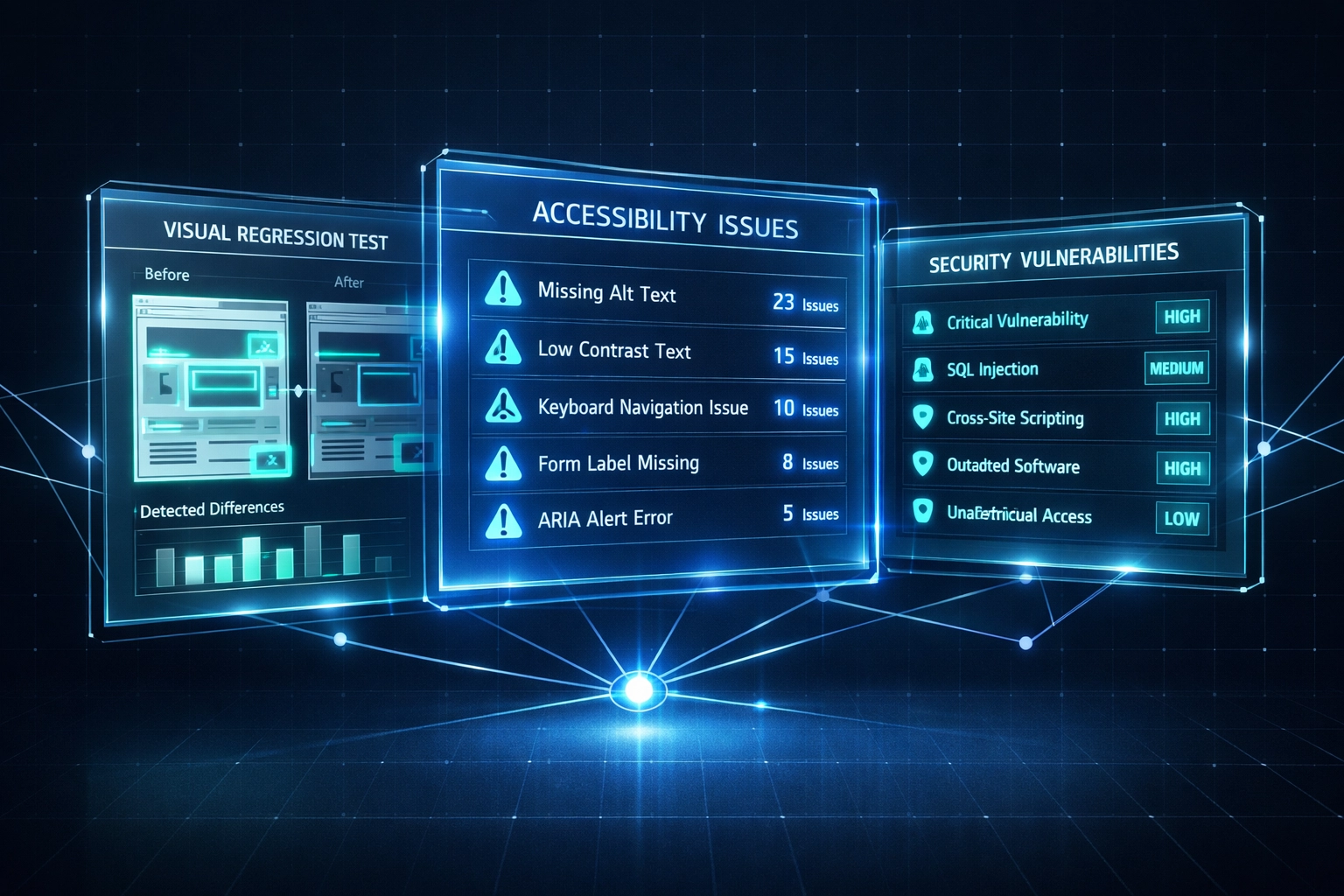
AI qa tool platforms can scan for visual changes, accessibility compliance violations, and security vulnerabilities simultaneously. AegisRunner’s AI Page Analysis performs all three validations in parallel during every test run.
Here’s how it works:
Single crawl, multiple analyses. When AegisRunner crawls your application, the AI analyzes each page across three dimensions at once. The DOM structure gets inspected for security risks while AI models evaluate color contrast ratios and detect visual regressions from baseline screenshots.
Context-aware validation. The AI understands relationships between testing dimensions. When it detects a button style change, it automatically checks if the new design maintains sufficient contrast ratios and proper ARIA attributes. A single code change gets evaluated for functional, accessibility, and security impact.
Intelligent prioritization. Not all issues carry equal weight. AegisRunner’s AI ranks findings by severity and impact, highlighting critical security vulnerabilities and WCAG Level A violations before minor color contrast issues.
This unified approach catches problems that slip through traditional QA processes. A new form component might pass functional tests but fail accessibility testing automation checks and introduce XSS vulnerabilities: all discovered in one test run.
Regression Detection That Understands Intent
Visual regression tools traditionally compare screenshots pixel-by-pixel. Change one color value and tests fail.
AegisRunner’s AI distinguishes between intentional changes and actual regressions:
- Semantic understanding: AI recognizes when updated branding changes button colors intentionally versus when rendering bugs alter layouts unexpectedly
- Structural analysis: DOM comparisons detect when elements disappear or interactive features break, even if screenshots look similar
- Behavioral validation: The AI verifies click targets remain functional and forms still submit correctly
Your rebrand won’t trigger 500 false positives. Actual broken checkout flows will.

Accessibility Testing Automation Without Manual Audits
Manual accessibility audits take hours. Automated checks cover only part of WCAG requirements; manual accessibility review remains necessary.
AegisRunner’s AI scans components across all pages simultaneously:
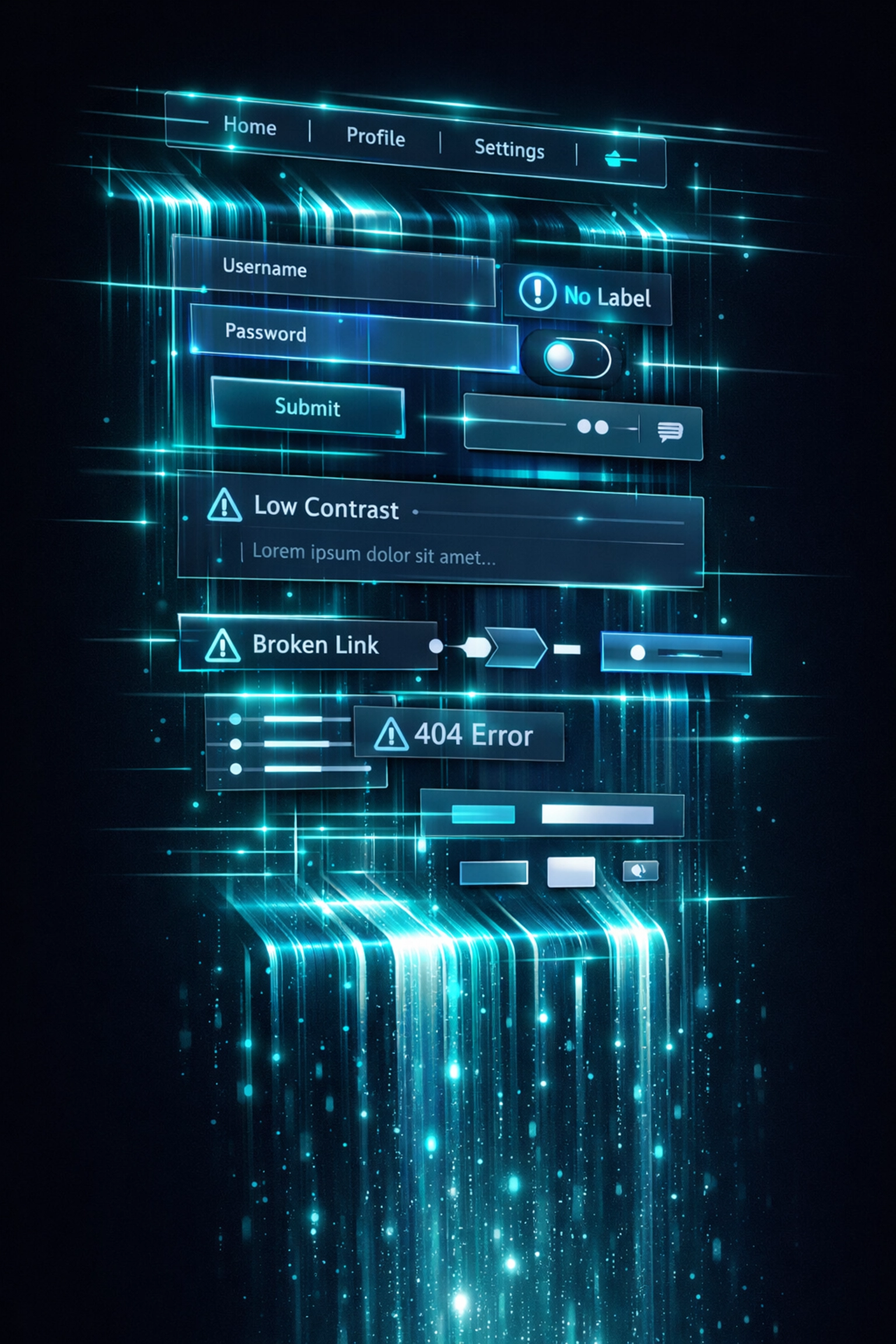
Automatic pattern detection. The AI identifies heading hierarchies, form label associations, and keyboard navigation paths. It flags improper heading structures (<h1> followed by <h4>) and unlabeled form inputs instantly.
Color contrast analysis. Every text element gets evaluated against its background. The AI calculates contrast ratios and identifies WCAG Level AA and AAA failures automatically.
Alternative text generation. When images lack alt attributes, the AI suggests descriptive alternatives based on visual content and surrounding context.
Screen reader simulation. AegisRunner tests keyboard-only navigation and simulates screen reader experiences, highlighting where assistive technology encounters barriers.
Critical issues surface immediately. Your team fixes accessibility violations before deployment, not after customer complaints.
Security Testing Automation That Adapts
Security testing automation typically requires separate tools and specialized expertise. Penetration tests happen quarterly if you’re lucky.
AegisRunner embeds security validation into every test run:
Attack vector testing. The AI automatically attempts common vulnerabilities: SQL injection, XSS, CSRF: against forms and input fields. It tests authentication flows for session fixation risks and evaluates API endpoints for authorization bypasses.
Traffic pattern analysis. The AI monitors request/response patterns during testing, flagging suspicious behaviors like excessive redirects or unexpected data exposure in responses.
Continuous adaptation. Machine learning models update continuously, incorporating new attack patterns and vulnerability signatures. Your security testing stays current without manual tool updates.
Intelligent focus. The AI prioritizes high-risk areas based on application architecture. Login flows, payment processing, and user data handling get extra scrutiny automatically.
Teams without dedicated security expertise still catch critical vulnerabilities early.
The Unified Workflow Advantage
Running three test types in one pass delivers compound benefits:
Faster feedback loops. Developers get comprehensive results in minutes, not days. Pull requests include regression, accessibility, and security status simultaneously.
Resource efficiency. One test run consumes fewer CI/CD minutes than three separate suites. Compare execution minutes and review effort for the same scope before estimating resource savings.
Contextual insights. When accessibility violations and visual regressions occur on the same component, the unified report makes root cause analysis immediate. No more correlation detective work across multiple dashboards.
Deployment confidence. Every code change gets validated across all three dimensions automatically. Critical violations block deployment: accessibility failures get the same priority as security vulnerabilities.
Integration into existing workflows happens seamlessly. AegisRunner connects directly to your CI/CD pipeline, running comprehensive validation on every commit or pull request.
Real-World Implementation
Start with baseline establishment:
Initial crawl: Point AegisRunner at your staging environment. The AI crawls your application, capturing screenshots, analyzing DOM structure, identifying forms and interactive elements, and documenting accessibility compliance status.
Threshold configuration: Set acceptance criteria for each testing dimension. Define which accessibility levels matter (WCAG 2.1 Level AA minimum), establish visual difference thresholds, and specify security vulnerability severity limits.
Continuous validation: Every subsequent test run compares against established baselines. New accessibility violations get flagged. Visual regressions trigger alerts. Security vulnerabilities block deployment.
The AI Test Generation feature creates comprehensive test coverage automatically. No manual test writing required.
What Traditional QA Misses
Separate testing approaches create specific blind spots:
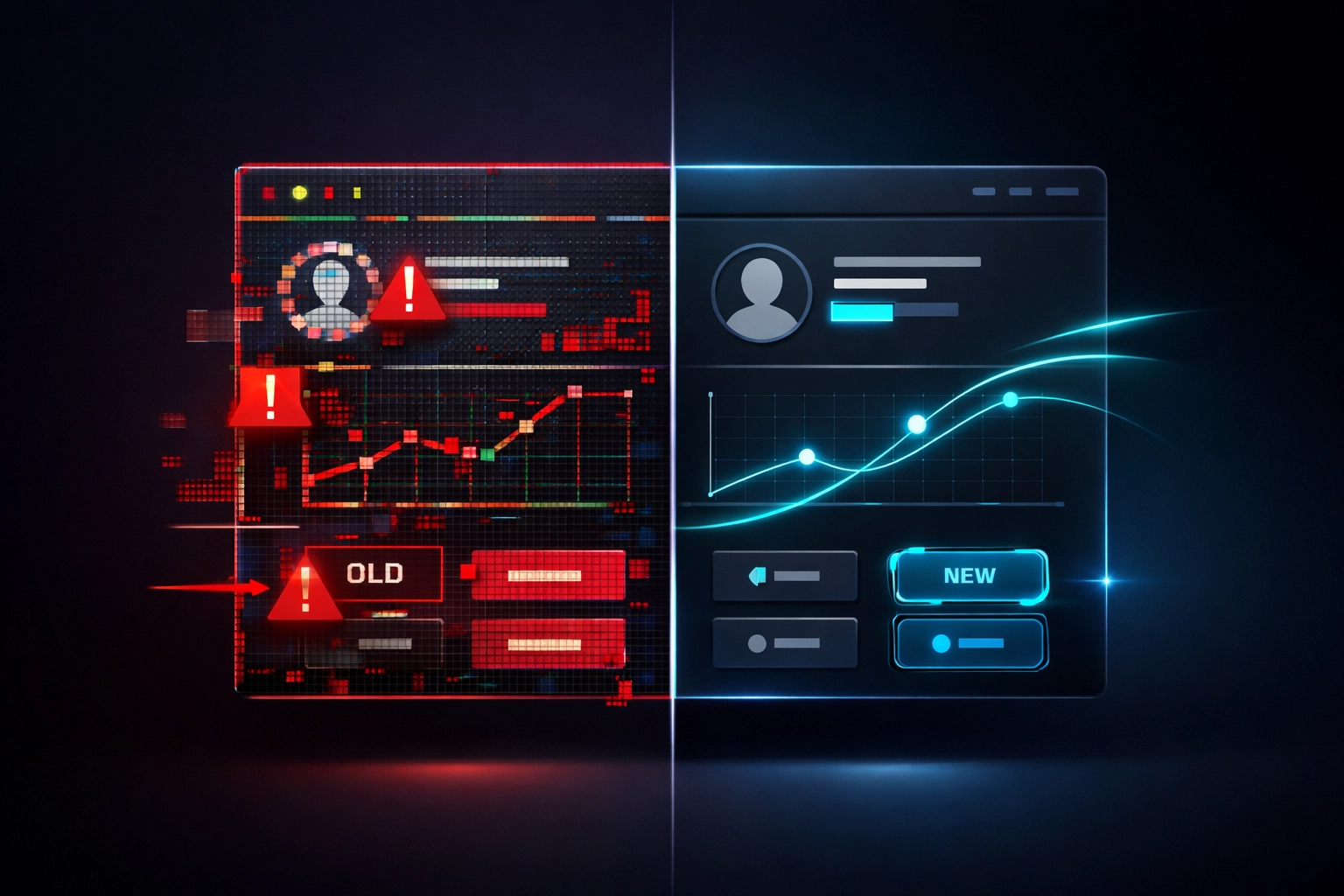
Interaction effects. A visual design change that improves aesthetics might reduce color contrast below WCAG standards. Traditional regression testing approves the visual change while accessibility checking happens later: or never.
Timing gaps. Security vulnerabilities introduced during sprint N might not get detected until the quarterly penetration test. Meanwhile, the vulnerability reaches production.
Context loss. When accessibility issues and functional regressions occur together, separate reports obscure the relationship. Developers fix one without realizing it impacts the other.
AegisRunner brings findings and run evidence into one workflow. Validate the reached pages and observed state for each check rather than assuming every audit covers the same interactions.
The AI Advantage in Testing
AI-powered automation brings capabilities impossible with rule-based testing:
Adaptive learning. The system improves over time, learning your application’s patterns and reducing false positives while increasing detection sensitivity for actual issues.
Intent recognition. Unlike pixel comparison tools, AI understands when changes are intentional versus regression bugs.
Comprehensive coverage. Human testers can’t check every page for accessibility violations and security risks during every sprint. AI does this automatically.
Bias awareness. While AI introduces efficiency, combine automated checks with manual validation for complex scenarios. Screen reader testing by actual users remains valuable for nuanced accessibility validation.
Getting Started with Unified Testing
Implementing comprehensive automated testing doesn’t require massive process changes:
Start small. Begin with crawl-based testing on critical user flows. Let AegisRunner analyze your authentication, checkout, and dashboard pages first.
Review findings. The AI generates reports highlighting regression, accessibility, and security issues together. Prioritize critical violations first.
Iterate and expand. Add more flows and pages incrementally. Configure scheduling to run comprehensive checks nightly or on every deployment.
Integrate feedback loops. Connect Slack integration to notify teams immediately when critical issues surface.
Teams typically see results within the first week: catching accessibility violations and security issues that existed for months in production.
Your QA Team Shouldn’t Choose Between Testing Dimensions
Regression, accessibility, and security testing all matter. None should wait for “when there’s time.”
AegisRunner’s AI Page Analysis removes the tradeoff. Every test run validates all three dimensions simultaneously. Your team catches issues that traditional QA approaches miss entirely.
Start comprehensive automated testing today. Get started with AegisRunner: no credit card required.